The Hidden Costs of Legacy ERPs: Why Cloud Migration is Mandatory
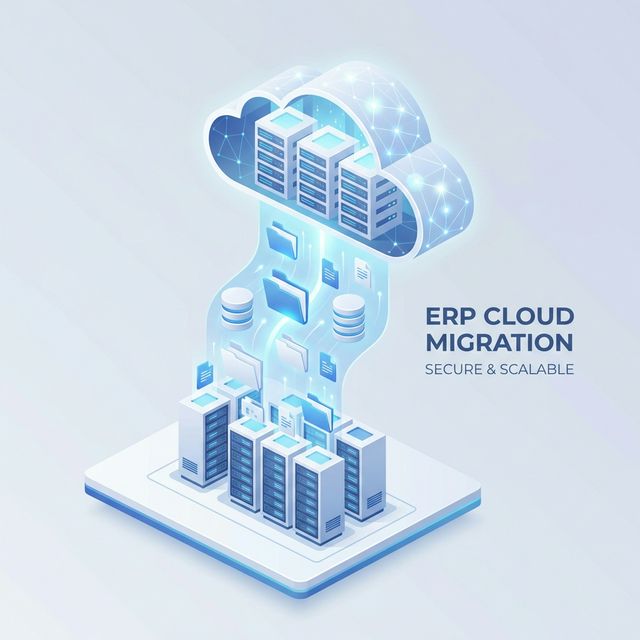
Maintaining on-premises ERP systems is a ticking time bomb. The sheer technical debt, combined with the inability to securely integrate with modern APIs, makes cloud migration an existential imperative.
For years, manufacturers, distributors, and large service firms avoided migrating their core ERPs (Enterprise Resource Planning) to the cloud due to fears around data sovereignty and migration downtime. In 2026, the risk model has flipped: staying on-prem is infinitely more dangerous.
The Unseen Danger of Technical Debt
Legacy ERPs require physical server maintenance, manual disaster recovery backups, and specialized developers who understand outdated coding languages (like COBOL or ancient versions of Java). When a critical security vulnerability drops, patching an interconnected legacy system can take weeks, leaving your financial data exposed.
💡 Key Takeaway
Cloud-native ERPs operate on a multi-tenant SaaS model, meaning security updates, feature rollouts, and performance patches are deployed globally and instantly by the vendor.
API First: The Composable Enterprise
Modern businesses do not use monoliths; they use best-of-breed toolchains. If your sales team uses Salesforce, your HR uses Workday, and your warehouse uses a custom scanner app, they must all speak to your ERP. Cloud ERPs are built with RESTful APIs natively, allowing seamless, bidirectional data flow without expensive custom middleware.
A successful cloud migration is not a 'lift and shift'. It is an opportunity to completely audit and re-engineer your core business processes to leverage modern automation.

Ready to Implement AI in Your Business?
Our experts can help you build an implementation roadmap tailored to your specific infrastructure.